
The Unexplained
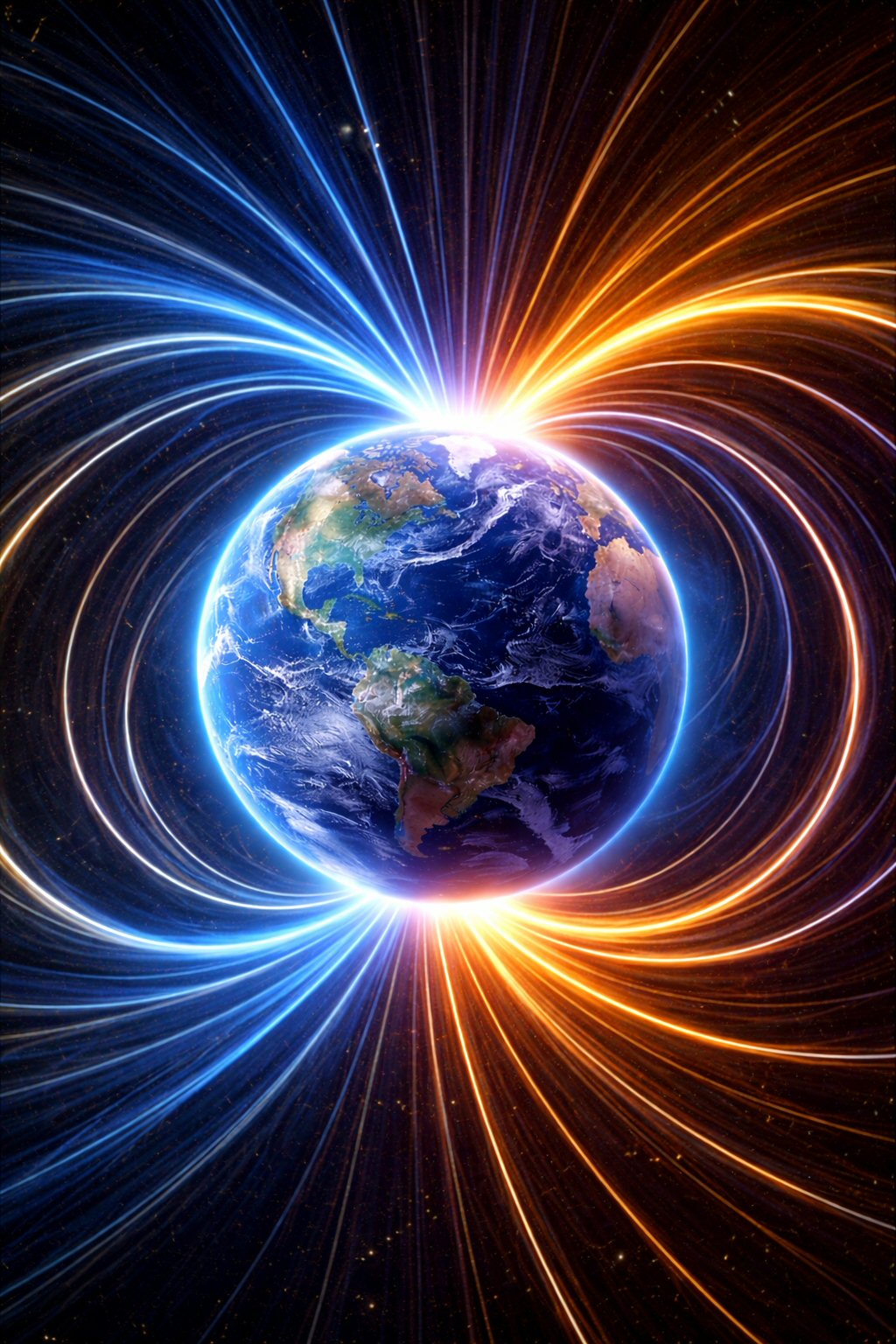
Earth’s Magnetic Field: A Shield in Motion?
Earth’s magnetic field acts as a dynamic shield, protecting the planet from solar radiation while constantly shifting, weakening, strengthening, and even reversing over geological time. Though scientists understand the core processes that generate it, the timing and triggers of major fluctuations remain uncertain—making this invisible force both measurable and still partially unexplained...
Read Article!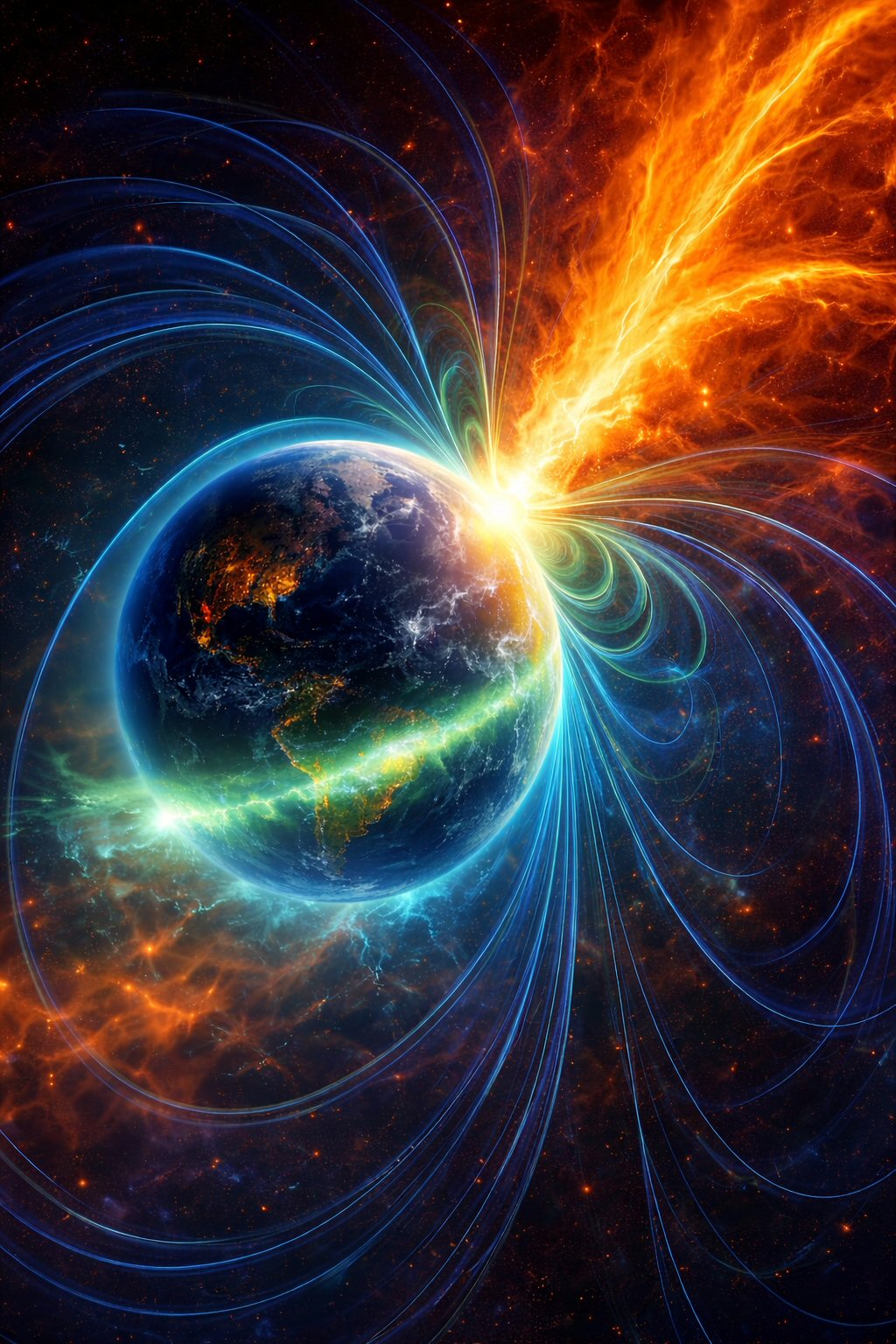
Geomagnetic Storms: What is Happening?
Geomagnetic storms occur when solar energy interacts with Earth’s magnetic field, producing auroras and occasionally affecting satellites, GPS systems, and power infrastructure. While scientists can monitor solar activity in real time, the timing and intensity of geomagnetic storms remain difficult to predict, keeping them firmly within the unexplained...
Read Article!
Solar Flares: Are we Doomed?
Solar flares are powerful bursts of energy from the Sun that can affect space weather, yet their timing and intensity remain difficult to predict despite decades of study. As scientists monitor fluctuating solar activity and conflicting signals from recent observations, solar flares remain a measurable but fundamentally unpredictable phenomenon within the unexplained.
Read Article!
Dark Energy: Pushing us Away?
Dark energy is an unseen force believed to make up about 68 percent of the universe, revealed through the surprising discovery that cosmic expansion is accelerating rather than slowing down. While scientists debate whether it arises from vacuum energy, evolving cosmic properties, or gaps in our understanding of gravity, dark energy remains one of the most consequential—and unexplained—drivers of the universe’s fate.
Read Article!
Dark Matter: Is it Real?
Dark matter cannot be seen or directly detected, yet its gravitational influence appears essential to holding galaxies together and shaping the large-scale structure of the universe. While scientists debate whether dark matter is an undiscovered form of matter or evidence that gravity itself behaves differently at cosmic scales, its true nature remains one of modern science’s most enduring mysteries.
Read Article!
Time and Perception
Time perception may feel universal, but research across biology, psychology, and social science suggests it is a flexible experience shaped by emotion, memory, and context rather than a single internal clock. From early infancy to adult cognition, evidence shows that how humans experience time remains measurable, influential—and still fundamentally unexplained.
Read Article!
Coronal Mass Ejection (CME)
A powerful solar eruption did occur—but despite alarming headlines, its effects were largely confined to space, with no confirmed damage to satellites, power grids, or life on Earth. The event is a sharp reminder of how vulnerable our space-based systems are—and how easily uncertainty can be amplified into fear when hard data is still coming in...
Read Article!